
EV Showdown: Can U.S. Automakers Beat China's Electric Giants?
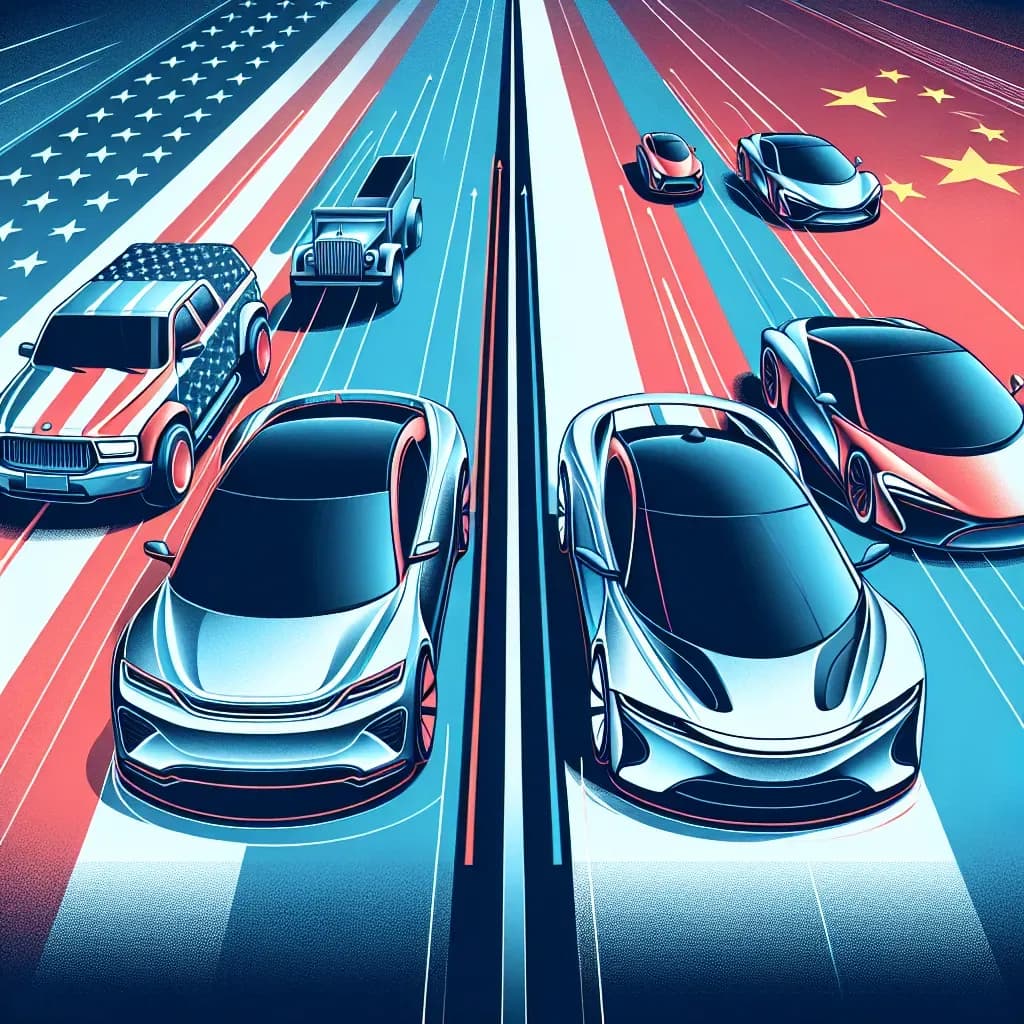
Title: The Race for Electric Vehicles: Can U.S. Automakers Compete with Chinese Rivals?
As the automotive industry undergoes a seismic shift from gasoline-powered vehicles to electric vehicles (EVs), U.S. automakers are at a crossroads. The question on everyone’s mind is whether they can maintain their foothold in the market while facing fierce competition from Chinese EV manufacturers. The urgency of this challenge is underscored by recent discussions around how companies like General Motors ($GM), Ford Motor Company ($F), and Tesla ($TSLA) are strategizing to navigate this evolving landscape.
The Challenge Ahead
U.S. automakers have traditionally thrived on producing large, gasoline-powered vehicles that have dominated the market for decades. However, with the rise of electric vehicles, particularly those manufactured by Chinese companies such as NIO Inc. ($NIO) and BYD Company Limited ($BYD), the stakes have never been higher. These companies have made significant investments in EV technology and infrastructure, allowing them to produce vehicles that are often more appealing to environmentally-conscious consumers.
Ford ($F), for instance, is investing heavily in electric vehicle production, with a commitment to making half of its global vehicle volume electric by 2030. The company’s Mustang Mach-E and the upcoming F-150 Lightning are key components of this strategy. However, as Ford transitions, it faces the dual challenge of managing its existing gasoline-powered vehicle portfolio while ramping up EV production.
General Motors ($GM) is similarly positioned, with ambitious plans to become a fully electric automaker by 2035. Their Chevrolet Bolt EV has received positive reviews, but the company needs to sustain momentum against the nimble Chinese competitors that are rapidly expanding their market share.
Tesla: A Beacon in the EV Landscape
Tesla ($TSLA), the poster child for the electric vehicle movement, continues to set the standard for innovation and consumer appeal in the EV market. With its advanced battery technology and robust charging infrastructure, Tesla’s dominance presents both a challenge and an opportunity for traditional automakers. As U.S. manufacturers strive to catch up, they must also learn from Tesla’s approach to innovation and consumer engagement.
The Strategic Shift
To compete effectively, U.S. automakers are exploring partnerships and investments in technology that will enhance their EV offerings. For example, collaborations with tech companies for software development and advancements in battery technology are becoming increasingly common. Additionally, companies are focusing on building sustainable supply chains to ensure the availability of key materials needed for EV production.
Conclusion
The shift to electric vehicles is not just a trend but a fundamental transformation of the automotive industry. U.S. automakers must adapt quickly to maintain their market share against the backdrop of fierce competition from Chinese EV manufacturers. With companies like General Motors ($GM), Ford Motor Company ($F), and Tesla ($TSLA) at the forefront of this battle, investors should closely monitor their strategies and performance in the EV space. The success of these automakers will not only determine their future but could also reshape the entire automotive landscape.
Read more: Can U.S. Automakers Compete With Chinese EVs While Focusing on Gas Guzzlers?